
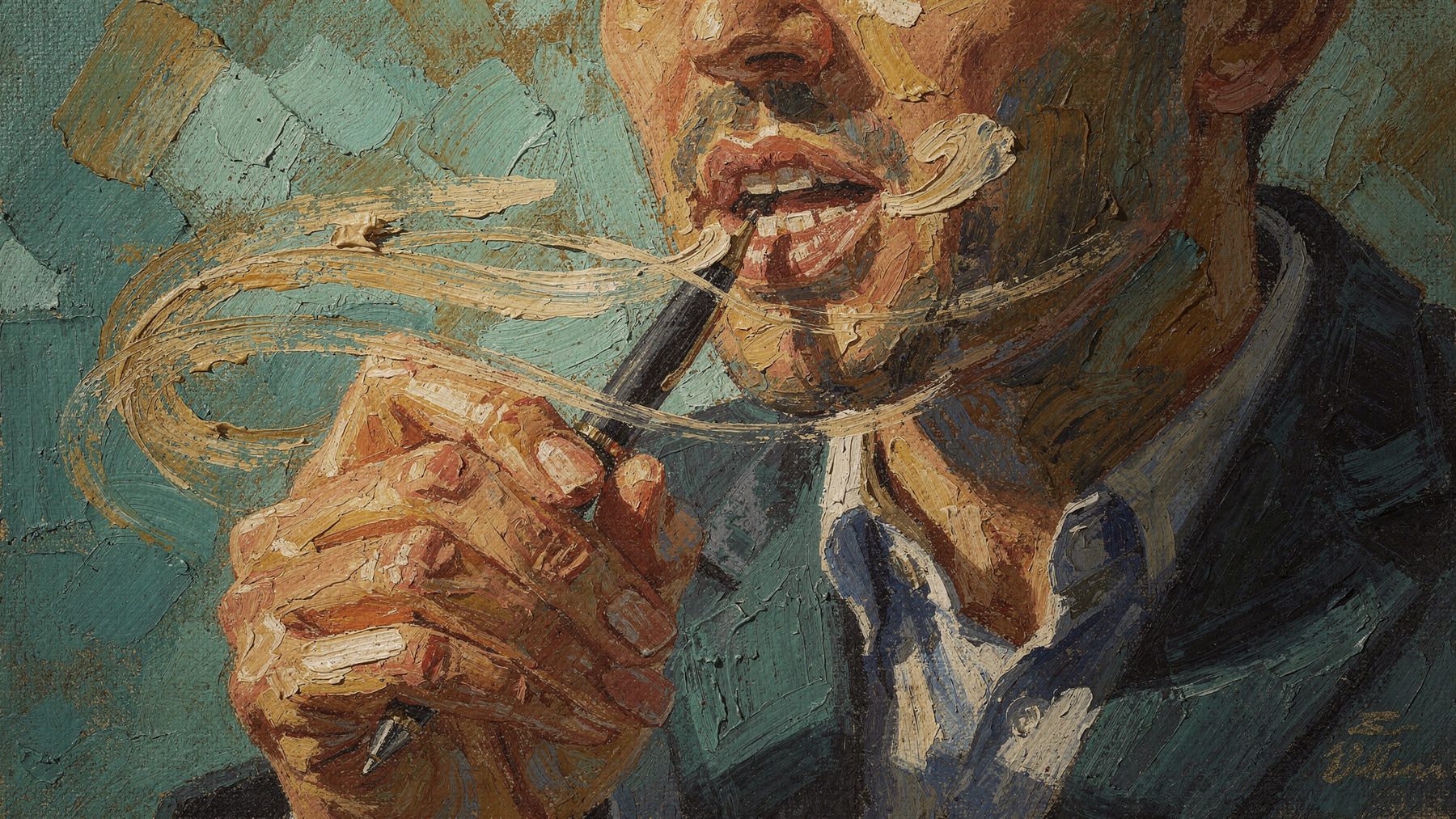
You can usually tell within two sentences. A leader's post arrives, tidy and well structured, and something is off. The rhythm is too even, the opinions too rounded, the phrasing a shade too corporate. It reads like content, not like a person. The name at the top is real. The voice is not.
This is the failure that gives ghostwriting a bad name. Done badly, it swaps a leader's actual thinking for a smooth substitute. Done well, it does the opposite. It captures how the person genuinely thinks and lets them show up consistently without spending their week writing.
Capture first, draft second
Good ghostwriting starts with listening, not typing. The raw material is the leader talking. A recorded conversation, a voice note fired off between meetings, a marked-up transcript from a talk they gave. The writer's first job is to find the real opinions, the specific examples, and the phrases the leader actually uses. Only then does drafting begin, and it begins from that captured material rather than from a blank page and a topic brief.
This order matters because voice lives in specifics. The odd turn of phrase, the example they always reach for, the thing they are willing to say that others hedge. A draft built from a generic prompt cannot contain those. A draft built from ten minutes of the leader actually talking usually can.
The writer's job is not to sound impressive. It is to sound like the person, on their best-thinking day.
Where ghostwriting goes wrong
The common failures are predictable once you know them. The writer imposes their own style and slowly the leader disappears. The content chases trends the leader does not care about, so it is topical but hollow. Everything gets sanded down in review until no sentence risks anything, which also means no sentence is worth reading. And the leader stops recognising their own posts, which is the clearest sign the process has drifted.
Underneath all of these is the same mistake. Treating the output as marketing to be optimised rather than a person to be represented. Audiences are good at detecting the difference. What they respond to is closer to what we have called digital charisma, the sense of a real mind on the other side of the screen, and that survives ghostwriting only when the process protects it.
A voice that holds up under machines and people alike
There is a second reason to keep it real, beyond the human reader. Content produced at machine scale is now cheap and everywhere, and the value has moved to the named, accountable, distinctive voice. The Stanford HAI AI Index has tracked how quickly generated content has grown as a share of what gets published (Stanford HAI AI Index). In that flood, a leader who sounds like a specific human is the thing that stands out, and trust still concentrates on named individuals rather than institutions, as the Edelman Trust Barometer keeps finding (Edelman Trust Barometer). Generic ghostwriting throws that advantage away. Real-voice ghostwriting keeps it.
None of this means the writing should be rough. Structure, clarity and a strong opening still matter, and they are learnable craft. We break down what a genuinely good post is made of in the anatomy of a great LinkedIn post. The skill is applying that craft without ironing out the person.
- Start from the leader's own words, captured in conversation, not from a topic brief.
- Keep the opinions sharp in review. Removing every edge removes the reason to read.
- Use one test above all: does the leader read it and think, yes, that is what I actually believe.
When it works, the leader gets consistency without the calendar burden, and the audience gets the real person at a pace that person could never sustain alone. That is the whole point. Not a manufactured voice, but a protected one.
Ripple ghostwrites in a way that starts with the leader's own thinking and keeps it intact, so what gets published still sounds like them. If you want to hear how the capture process works in practice, we are happy to walk you through it.